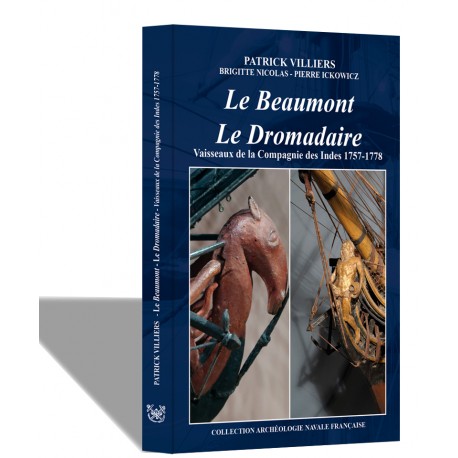
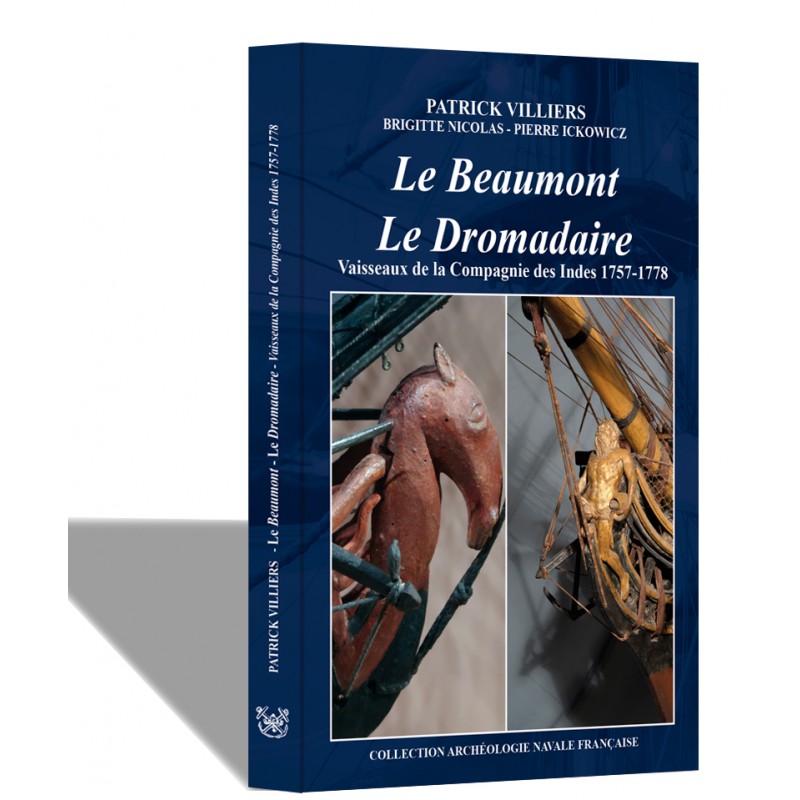
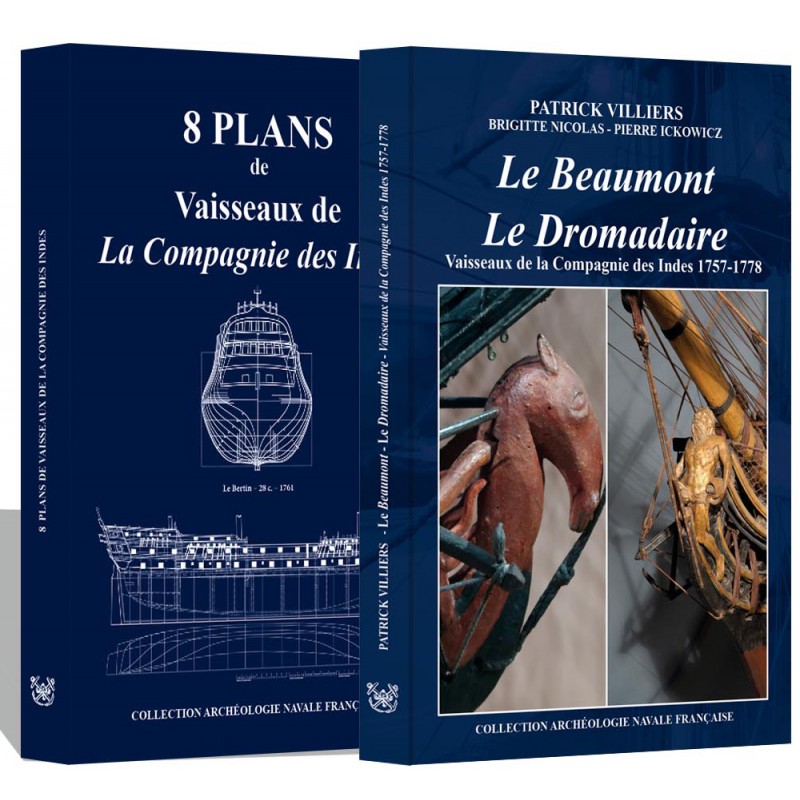
The BEAUMONT and the DROMADAIRE Ships from the East India Company 1757–1778
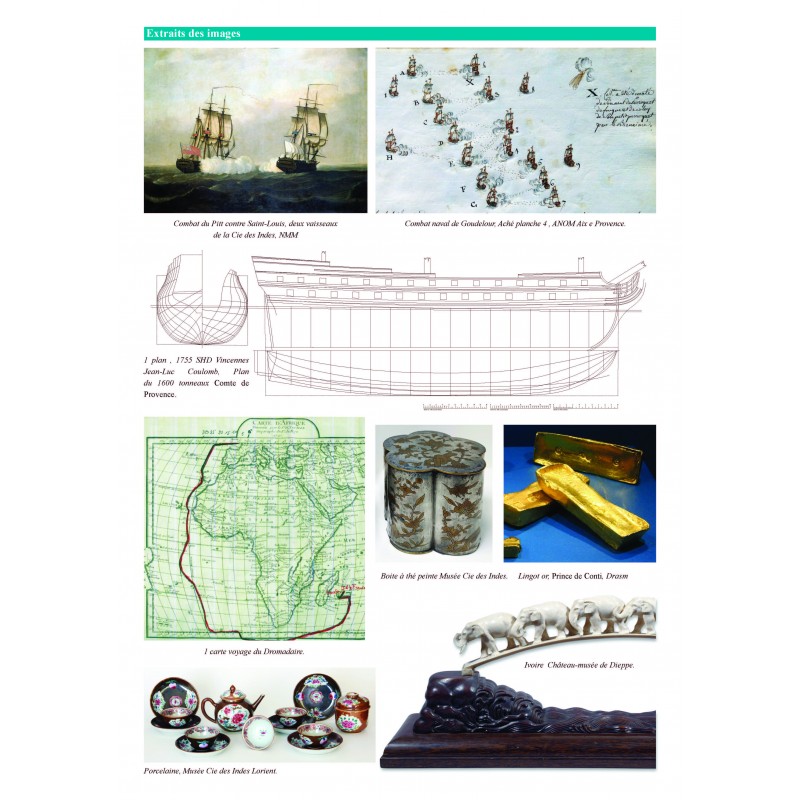
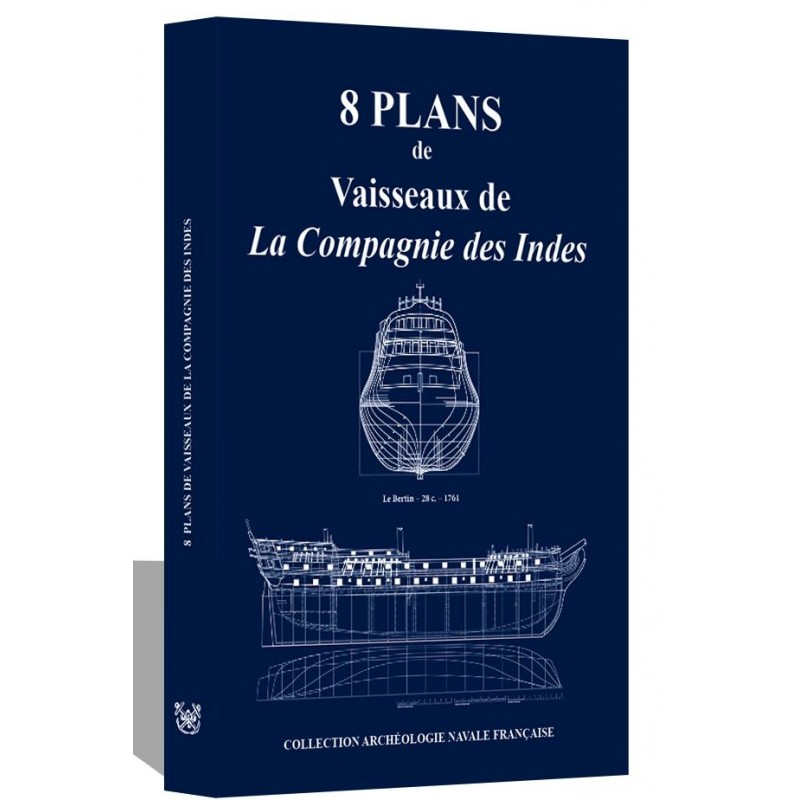
Hardback, 208 colour pages Including 370 photographs or etchings as well as 8 double-page ship plans.
Through the meticulous study of plans, models and paintings of the French, Dutch and English fleets, this work on the ships of the East India Company becomes the new absolute reference for historians, model makers and all enthusiasts of maritime history.
 En stock

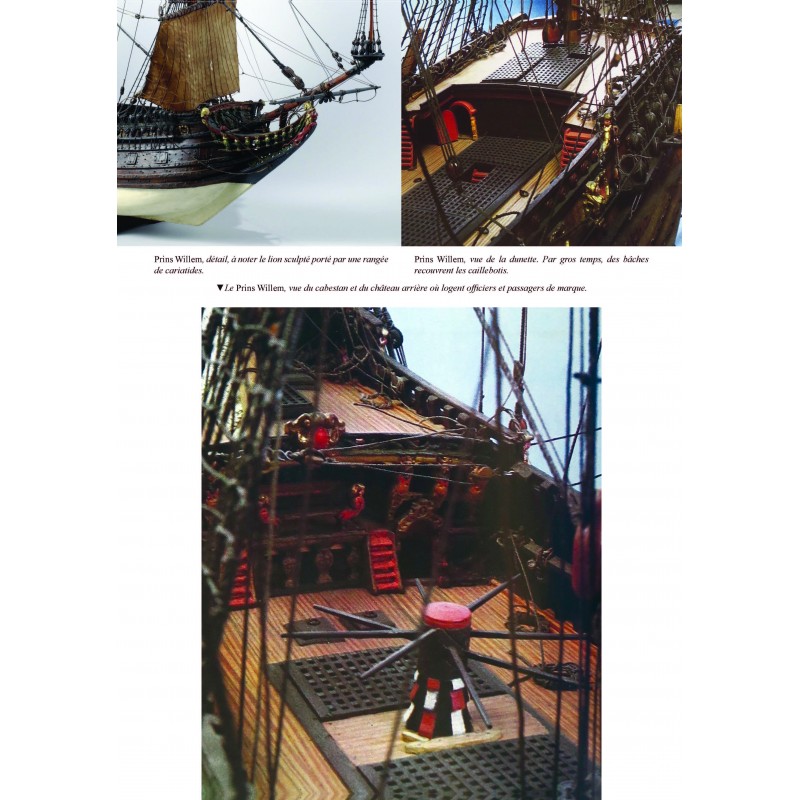
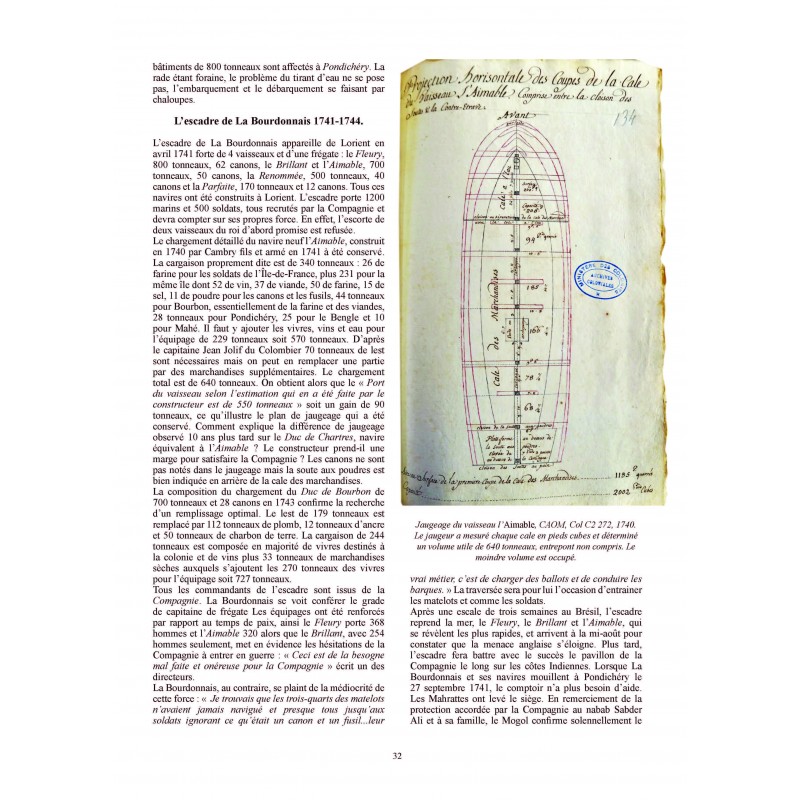
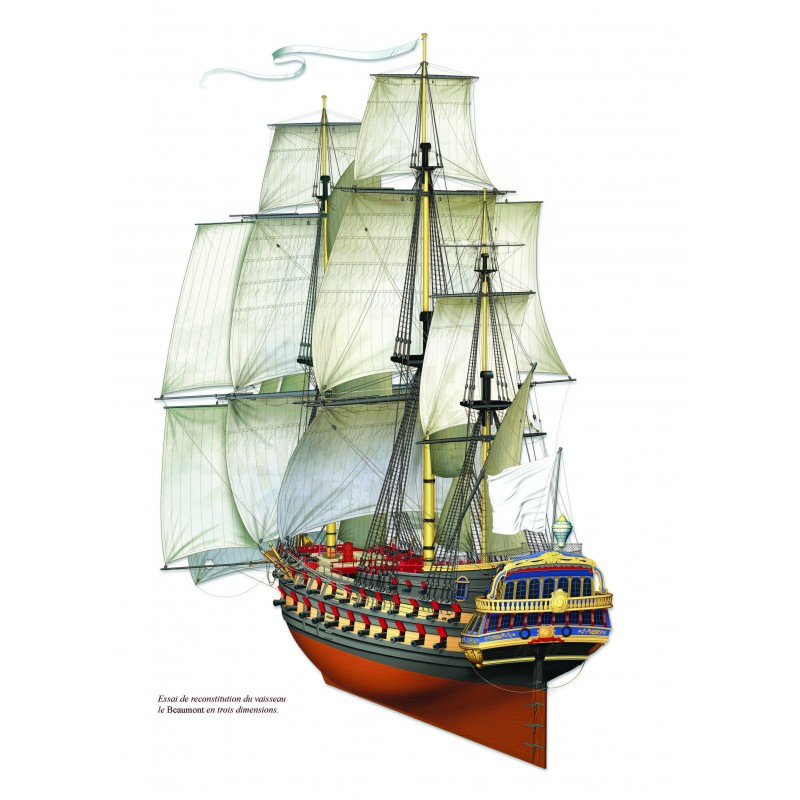
Jewels of the Château-Musée de Dieppe collections, the Beaumont and the Dromadaire are the only surviving examples of the 600 and 900-ton vessels from the French East India Company. They stand as the last remaining evidence of the Company’s quest to find the ideal ship for voyages to India and China. Despite the victories of the Bourdonnais and the capture of Madras during the War of the Austrian Succession, the Company sought a design capable of evading the Royal Navy by organising a competition between the King’s shipbuilders and those of the Company.
From 1755 to 1765, the Company pitted the finest naval engineers and shipbuilders against one another to draw up plans for vessels destined for India and China. Whilst the plans from the 1755 competition have been preserved, regarding the periodmodels, only the Beaumont remains: a magnificent model of the 900-tonne ship that sailed to China and that was subsequently lost while coming to the aid of the American Insurgents.
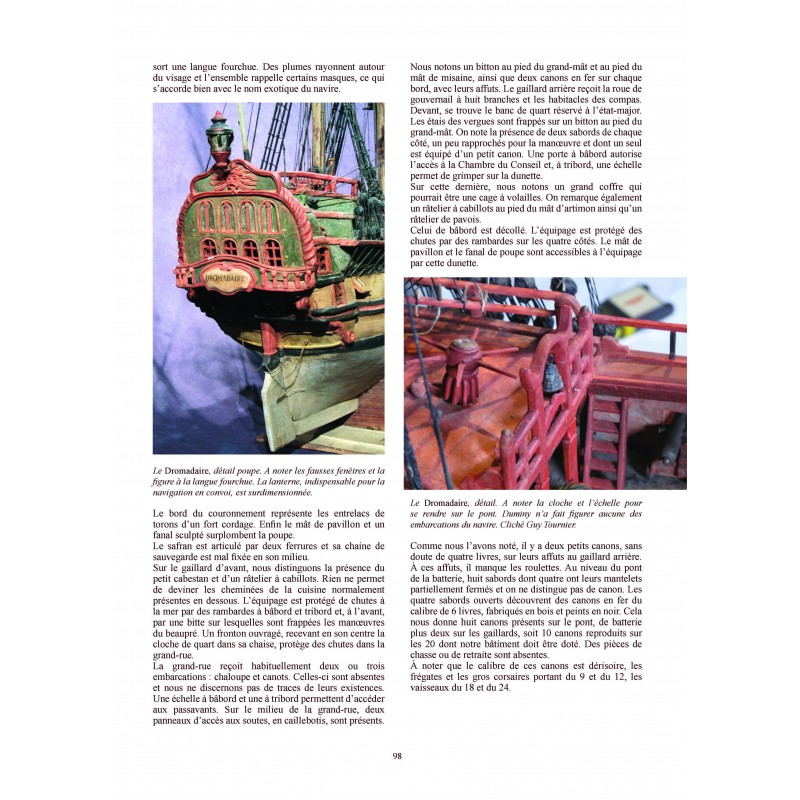
As for the 600-ton vessels, there is another model, the Dromadaire, an ex-voto built by a ship’s officer. It serves as a reminder of the hardships endured by the captains and crews, mostly Bretons, mainly from the districts of Lorient or Saint-Malo, as they brought back the porcelain, Indian textiles, ivory and teas so highly sought after in Europe.
By reconstructing the history of these two ships, along with the assistance of curators from the East India Company Museum in Port-Louis-Lorient and the Château-Musée in Dieppe, Patrick Villiers offers us a magnificently illustrated new perspective on this major trade, one of the driving forces behind the 17th and 18th centuries maritime economy.
Hardback, 208 colour pages Including 370 photographs or etchings as well as 8 double-page ship plans.
Contents
Chapter I: Europeans and China, from the Portuguese era to the VOC.
Chapter II: The ships of the first French East India Company.
Chapter III: Gilles Cambry, the Elder, and the first ships of the East India Company.
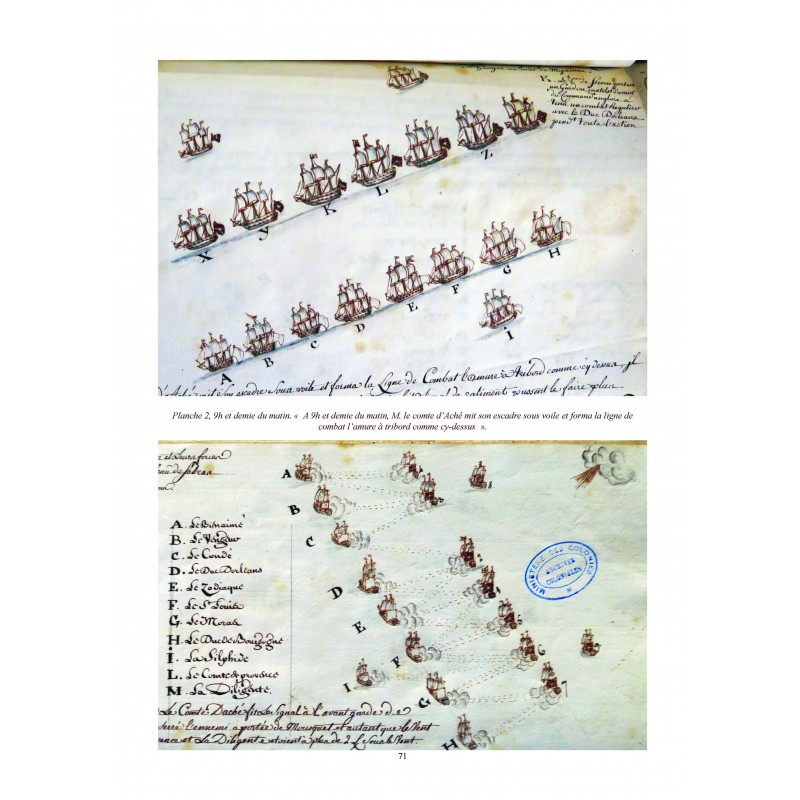
Chapter IV The Company’s vessels in the face of war at sea: 1739–1749.
Chapter V: The East India Company in the face of the return to peace: 1749–1755.
Chapter VI: 1755: the East India Company chooses Antoine Groignard.
Chapter VII: The Company’s ships facing the Seven Years’ War.
Chapter VIII: The East India Company and privateering.
Chapter IX: The flute Le Dromadaire, from success to shipwreck.
Chapter X: The Beaumont and the 900-ton vessels bound for China.
Chapter XI: The Beaumont and China under the Company’s flag: 1765–1770.
Chapter XII: The Beaumont and free trade with China, 1770–1777.
Chapter XIII: Brigitte Nicolas: The Beaumont’s cargoes to China.
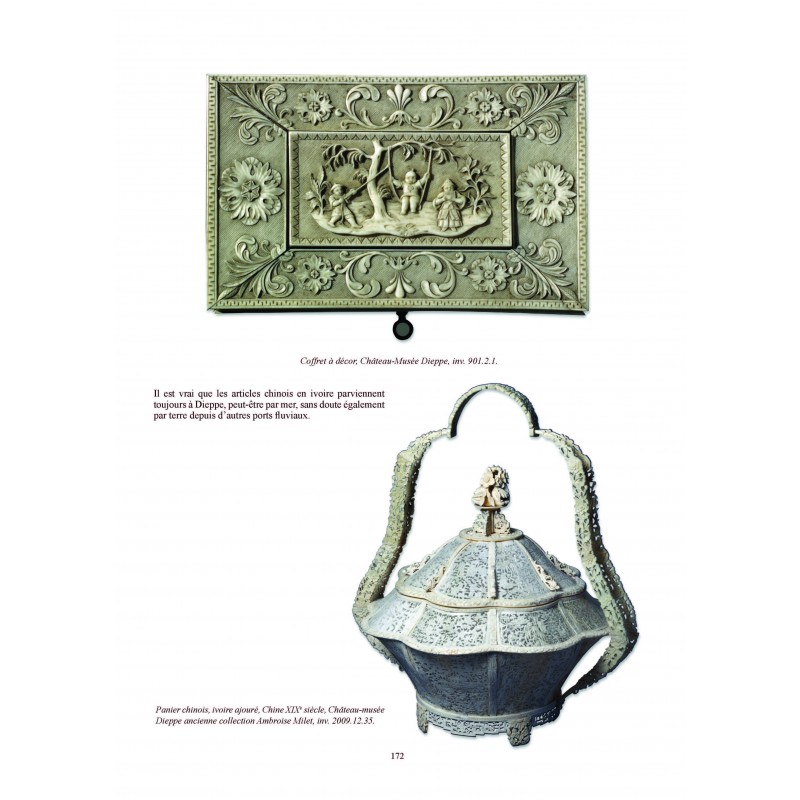
Chapter XIV: Pierre Ickowitcz: Dieppe, ivory and China in the 18th century.
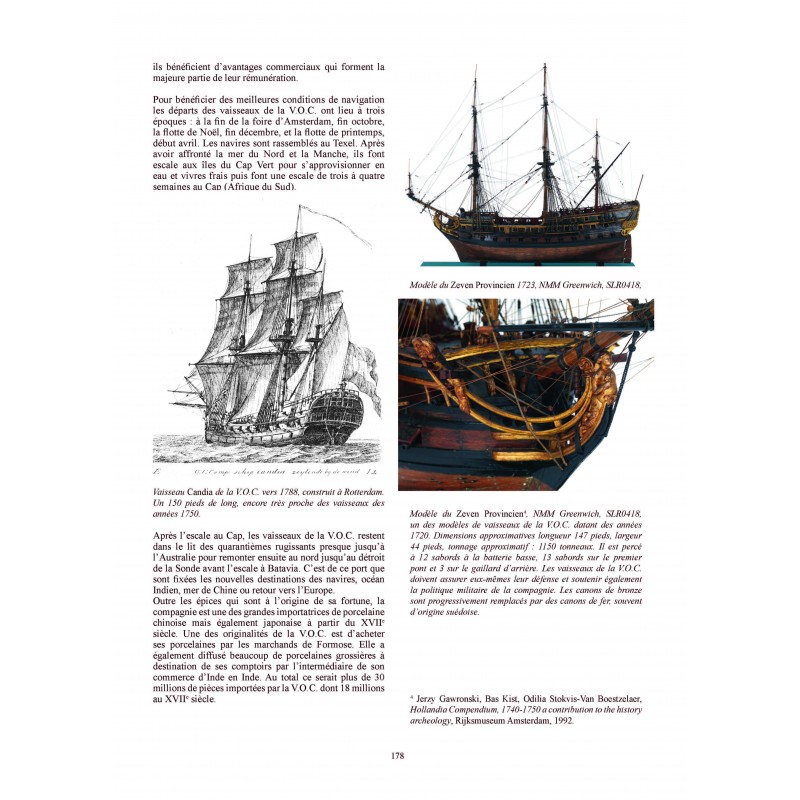
Chapter XV: The ships of the East India Company and the V.O.C.
Chapter XVI: The Lyon, the Bonhomme Richard and the War of Independence 1778–1779.
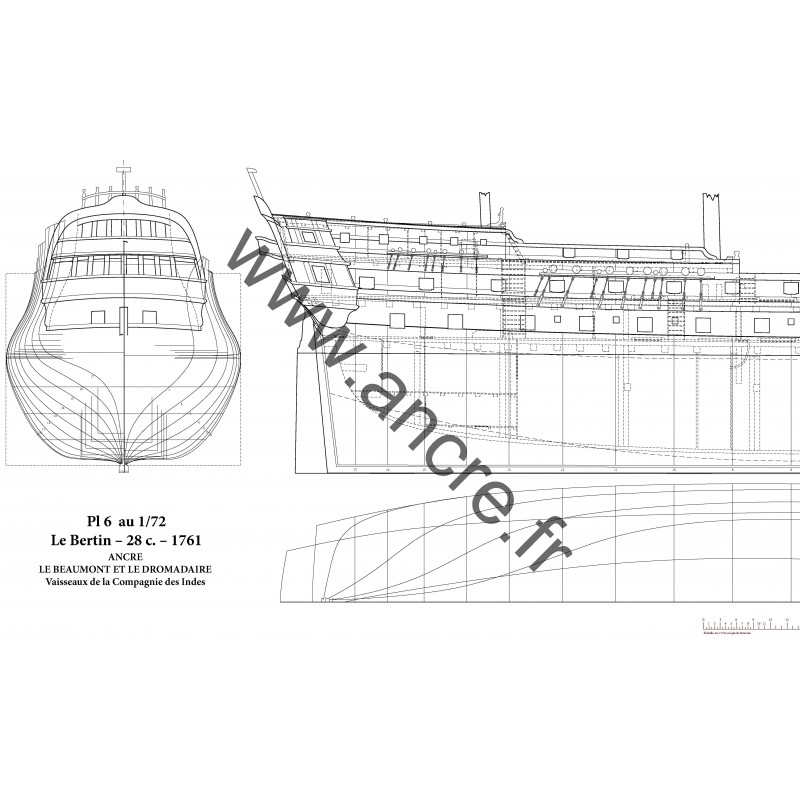
Plans at 1/72 or 1/48 scale are included:
7 plans of East India Company ships
And 1 plan of the Royal Navy's HMS Yarmouth
Historian's Notes
As with the Louis XVI Navy plan set, we have chosen to redraw the original plans and reproduce below the legends from the original plans. These legends vary from one plan to another. In some cases, the plan is neither dated nor signed, as is the case with the plan of the flute Le Massiac. The document held at the French Naval Historical Service (SHD) in Vincennes is probably a copy of the original plan. A comparison of the plans by Antoine Groignard and Jacques-Luc Coulomb reveals significant differences in the legends, even though they were drawn for the same East India Company competition, as evidenced by the legend on each of the four plans and the dates November 14 and 20, 1755. Coulomb only includes the three main dimensions, while Groignard details the tonnage and drafts.
The two plans from the National Maritime Museum in Greenwich are of two types: the plan of the ship Yarmouth and the plan of the Bertin. The plan of HMS Yarmouth is probably a copy of a lost original, hence the lack of information. The case of the Bertin is entirely different. It is no longer a preliminary plan but rather a survey of the dimensions of a captured ship, which were then sent to English engineers for analysis. For the history of these plans and the ships, we refer the reader to our book, *Le Beaumont et le Dromadaire, vaisseau de la Compagnie des Indes* (The Beaumont and the Dromadaire, Ships of the East India Company).
List:
Pl 1 Le Vengeur, 54c., 1756
Pl 2 L’Orient, 58c., 1756
Pl 3 Le Fortuné, le Brillant, 54c., 1756
Pl 4 Le Comte de Provence, le Bien Aimé, 58c., 1756
Pl 5 Le Massiac - flute, 1757
Pl 6 Le Bertin, 28c., 1761
Pl 7 HMS Yarmouth, 70c., 1742
Pl 8 Boullongne, 20c., 1761
Author : Patrick VILLIERS
No customer comments for the moment.